In his article “Is Google Making Us Stupid?”, Nicholas Carr addresses the present-day pervasiveness of internet use, and the cerebral pitfalls that it may cause. He writes of the possibility of the internet, or even computer use, changing the physiology of our brains from the ability to “draw our own inferences and analogies, foster our own ideas.” Furthermore, he argues, while Google may heighten thought productivity by efficiently providing a multitude of resources, it also has a financial interest in keeping us clicking, and therefore, distracted from cognition. His article assumes that the mode of reading and writing shapes our thoughts and their quality, and that in particular, shorter attention spans negatively impact deep thinking. His somewhat linear reasoning, however, relies heavily on anecdotal evidence, a bias that ultimately hurts his argument.
Throughout his article, Carr argues for the causal relationship of internet use, and the inability to deeply absorb or reflect upon reading. Carr raised instances from his own experience and his friend’s similar experiences of having developed a shorter attention span from their extensive internet use. He states, “Once I was a scuba diver in the sea of words. Now I zip along the surface like a guy on a Jet Ski.”; Carr’s friend Bruce Friedman, who writes blogs, claims that he is now no longer capable of reading War and Peace. But is it not at least a possibility that the development of their shorter attention spans is rooted in something other than internet use? We must take into account that cause is not equal to correlation. The inability to read War and Peace may, in fact, be caused by the astonishingly fast pace at which we live our lives today. Whereas ten years ago we may have had the time to sit and read a hefty Tolstoy novel with measurable progress, today, we lament a slow-loading internet page because we feel as though we barely have time to sit and wait. What was considered efficient then is now considered slow, and it could just as likely be attributed to the societal need to increase productivity, which takes away from the time we used to have for reading. Carr does not discuss or disprove the possibility of a correlative relationship, and his argument is weakened because of it.
Another example Carr raises as a case for mode of product shaping thought is that of Nietzsche’s stylistic change in writing after he began to write with a typewriter: Nietzsche’s writing began to take an aphoristic style that was terser than it was in the past. The problems that arise then are whether the mode of writing can shape thoughts at all, and how that relates to the correlation between reading and thoughts. To the first, I find it difficult argue that it cannot, since from my own experience, I do find that it can have an effect on the quality and style of writing.
When I write creatively, poetry and other sorts of ‘pretty’ writing comes much more easily to me when I’m writing with pen and paper. Conversely, I also find that the style that comes out on a Word document reads with a comparatively straight-forward tone. How my thoughts are expressed, however, is not dependent upon what my thoughts are. Macrocosmically, it is certain that Nietzsche’s writing was no less influential or deep when he began to write in aphorisms with a typewriter, which was when some of his most well known works were written.
Back to addressing the latter problem, I will assume that the mode of reading does affect one’s thoughts. What Carr implies here is that the two correlations are symmetric; in which case, each part must also be equal. To force equality between reading and writing would be difficult, including the physiological aspect of both. So, even if that is true for reading, it may not necessarily be true for writing. According neuropsychological findings, reading and writing abilities come from the same general part, though different areas of the brain: language comprehension is associated with Wernike’s area, while expression of language is linked to Broca’s area. In spite of that, while it can be reasonably argued that reading and writing are closely related it seems far-fetched that they are also similarly affected by external factors.
This still leaves the possibility of thoughts being affected by internet reading, which is by contrast, not far-fetched. Carr asserts that deep thinking can only come from deep reading, which he defines as the quiet reading of a book. Carr adds that deep thinking is also fostered “…by any other act of contemplation,” which, when applied to reading, is to critically think about the reading. By extension, then, it must be true that this “act of contemplation” can also be applied to what one reads on the internet. Carr has made a strong case for the difficulties of truly engaging with the material that is offered online by virtue of the medium, though he seems to forget throughout most of his article that reading is only as beneficial as the reader’s engagement and reflection with the material. Indeed, it can be taken as a truth that now more than ever much more effort is required to focus on a piece of writing. But what he is expressing – that reading books offers cognitively what reading pages on internet cannot – supposes that people (and young adults in particular) are so hooked on the internet that they no longer read. And that, as evidenced by the thriving book market and the popularity of the Harry Potter series, is quite untrue.
There comes a point, however, when correlation occurs with such frequency that it can be considered causal. It is also possible that the inability to read one piece of writing for a prolonged period of time has happened to enough people enough times to be considered an issue that threatens critical thinking in the masses. Carr has provided a good amount of anecdotal evidence, as well as psychological evidence from developmental psychologist, Maryanne Wolf. He certainly provided enough evidence to make his readers think about the (his) problem with Google, and find commonalities with in their own experiences as they read through his article. I will concede that I also related to his anecdotes as I was reading “Is Google Making Us Stupid?” though not all to an equal degree; I could relate to the specific account about Nietzsche far more than I could with Carr’s own, or with those of his friends’.
It is difficult, however, to avoid reflection upon what you read, since a reaction is in itself reflective. Thus, Google’s monetarily-driven goal to keep us clicking may also benefit internet users. The different perspectives that the internet is able to quite immediately provide is not something to be discounted. A broad perspective, after all, is as important to intellect as a deep one. The same should go with horizontal analysis versus vertical analysis.
Regardless of whether the quality of our thoughts will be compromised by the easy distractions that the internet provides, reading from the internet will become increasingly prevalent and convenient. It has unapologetically swaggered in and declared itself essential to modern education, and if we want to keep up with modernity, we have to give in to its presence. Perhaps the internet will change the way we think, but certainly not in the sense that it thought, in the future, will lack depth. And perhaps it will be as revolutionary. Google as the new Gutenberg: Luddites, stand aside.
Tuesday, September 23, 2008

Tuesday, September 9, 2008
A transformative reading experience.
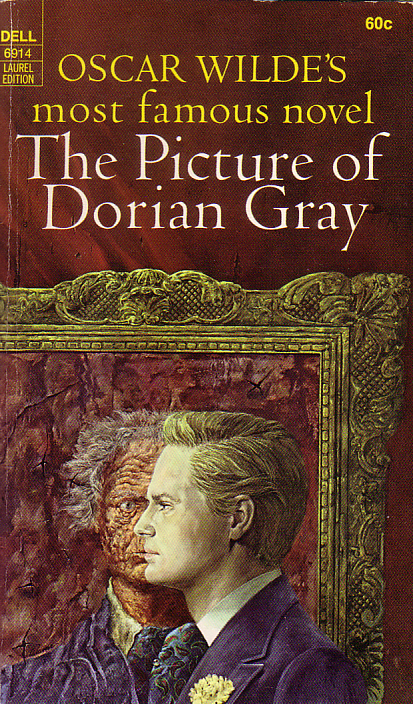
It was in the eleventh grade that I first attempted to read Oscar Wilde's The Picture of Dorian Gray. I had just read a couple of his plays the summer before; I did not like Lady Windermere's Fan quite as much as I did The Importance of Being Earnest, but was nonetheless enthralled by both. I was eager to feed my fascination of Wilde’s distinct literary expression, which I would liken to the vocal style of indie artist Kate Nash - lively, lyrical, and British - although that is probably a libel to Wilde (apologies to Kate Nash fans).
In any case, I was on a Cathay Pacific flight from Hong Kong to Thailand for a school trip, with approximately thirty other students from my high school, none of whom I knew very well. We were all packed in the economy class, which as their 2003 Skytrax “Airline of the Year” award suggests, would have been much less pleasant on another airline. It was configured such that in each row of seats, there are four seats between two aisles, and three seats on each side of the aircraft:

So, a good number of lucky folks secured aisle seats; still others of middling fortune got to sit by the window. I was not among either group, but was instead sandwiched between an aisle-seater and a window-seater. Feeling uncomfortably confined, compounded with the fact that I was slightly jealous that my friends were all on the
Haltingly, and with little success. The preface, a series of loosely related facts stated in quick succession, was at the time confounding and discouraging. Indeed, reading it felt like being lectured at by someone who truly believes in categorical imperatives. I convinced myself that I needed to rest my eyes from the tiny text of the pocket-sized book. The impressionistic brush-stroke pattern on the teal-colored seat in front of me seemed a lot more interesting than what Oscar Wilde had to say about aesthetics. I put the book away, and, lulled by the pretty colors, opted to take a nap.
One transformative trip and three years later, I was on yet another
This time, I was quickly immersed in the novel. Lord Henry Wotton, the amoral epicurean, manipulates the impressionable and good Dorian Gray into an obsession with youth, beauty and hedonism by the end of the second chapter. He (Dorian) wishes aloud that Basil Hallward's portrait of him would age but that he will not; his wish comes true, but the moral goes beyond 'be careful what you wish for'. The story follows the spiral of Dorian's incremental perverseness, as reflected in his portrait. Though he remains beautiful, his mind is poisoned by his actions. All this culminates with a shred of conscience that peeks through Dorian's finally monstrous soul. Through this tale, Wilde expounds the theories behind the decadent and aesthetic movements with the goal that readers will understand "All art is quite useless," which is indeed what he wrote as his last sentence of the preface.

I should note that half of what made this reading experience transformative is knowing that Oscar Wilde was deemed controversial, cheeky, and camp in his time. To write something quite so imbued with homoerotic themes in the early 1890's, when one can be found guilty of homosexuality (which eventually did happen to Wilde) is no small feat.
That aside, what really struck me was the way Wilde explored the dualism of beauty and morality. It reminded me of the transitory nature of things, and that material should remain largely unimportant beyond the basic needs of survival. From Dorian Gray, I gleaned that beauty (whether in art, or nature, or otherwise) serves an aesthetic purpose of creating a more pleasant environment, and its worth should not be discounted. As "All art is quite useless," however, so we should be reminded from time to time, in our material culture, to take the highly-marketed-to obsession with wealth, youth, and the newest Christian Louboutin 7" stilts with a grain of salt.
Subscribe to:
Posts (Atom)

