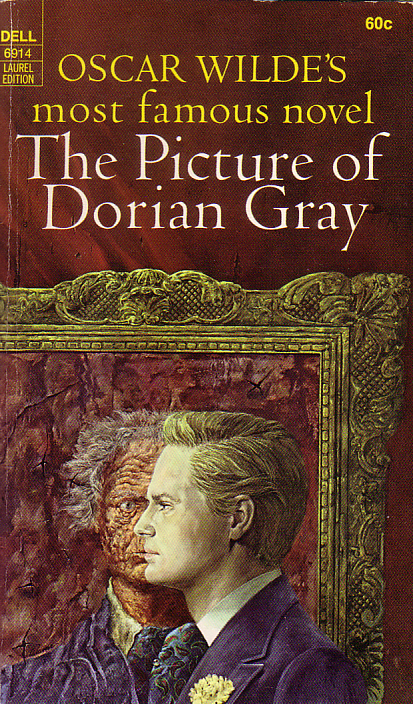
It was in the eleventh grade that I first attempted to read Oscar Wilde's The Picture of Dorian Gray. I had just read a couple of his plays the summer before; I did not like Lady Windermere's Fan quite as much as I did The Importance of Being Earnest, but was nonetheless enthralled by both. I was eager to feed my fascination of Wilde’s distinct literary expression, which I would liken to the vocal style of indie artist Kate Nash - lively, lyrical, and British - although that is probably a libel to Wilde (apologies to Kate Nash fans).
In any case, I was on a Cathay Pacific flight from Hong Kong to Thailand for a school trip, with approximately thirty other students from my high school, none of whom I knew very well. We were all packed in the economy class, which as their 2003 Skytrax “Airline of the Year” award suggests, would have been much less pleasant on another airline. It was configured such that in each row of seats, there are four seats between two aisles, and three seats on each side of the aircraft:

So, a good number of lucky folks secured aisle seats; still others of middling fortune got to sit by the window. I was not among either group, but was instead sandwiched between an aisle-seater and a window-seater. Feeling uncomfortably confined, compounded with the fact that I was slightly jealous that my friends were all on the
Haltingly, and with little success. The preface, a series of loosely related facts stated in quick succession, was at the time confounding and discouraging. Indeed, reading it felt like being lectured at by someone who truly believes in categorical imperatives. I convinced myself that I needed to rest my eyes from the tiny text of the pocket-sized book. The impressionistic brush-stroke pattern on the teal-colored seat in front of me seemed a lot more interesting than what Oscar Wilde had to say about aesthetics. I put the book away, and, lulled by the pretty colors, opted to take a nap.
One transformative trip and three years later, I was on yet another
This time, I was quickly immersed in the novel. Lord Henry Wotton, the amoral epicurean, manipulates the impressionable and good Dorian Gray into an obsession with youth, beauty and hedonism by the end of the second chapter. He (Dorian) wishes aloud that Basil Hallward's portrait of him would age but that he will not; his wish comes true, but the moral goes beyond 'be careful what you wish for'. The story follows the spiral of Dorian's incremental perverseness, as reflected in his portrait. Though he remains beautiful, his mind is poisoned by his actions. All this culminates with a shred of conscience that peeks through Dorian's finally monstrous soul. Through this tale, Wilde expounds the theories behind the decadent and aesthetic movements with the goal that readers will understand "All art is quite useless," which is indeed what he wrote as his last sentence of the preface.

I should note that half of what made this reading experience transformative is knowing that Oscar Wilde was deemed controversial, cheeky, and camp in his time. To write something quite so imbued with homoerotic themes in the early 1890's, when one can be found guilty of homosexuality (which eventually did happen to Wilde) is no small feat.
That aside, what really struck me was the way Wilde explored the dualism of beauty and morality. It reminded me of the transitory nature of things, and that material should remain largely unimportant beyond the basic needs of survival. From Dorian Gray, I gleaned that beauty (whether in art, or nature, or otherwise) serves an aesthetic purpose of creating a more pleasant environment, and its worth should not be discounted. As "All art is quite useless," however, so we should be reminded from time to time, in our material culture, to take the highly-marketed-to obsession with wealth, youth, and the newest Christian Louboutin 7" stilts with a grain of salt.


3 comments:
your account does more than justice to oscar wilde's enviable style of writing. i can see how his work has shaped you as a writer and as an individual. i also appreciate that i found out about you through this post. lovely use of content and style.
-mary frances
Excellent tags, Adrienne. And I love that the transformation was 3 years in the making. Those aphorisms in the Preface are a call-to-arms, aren't they? Wilde is so confident, so very much in his stride as a moralist. And because he's funny, and dark, you get the extra benefit of this first-rate brain mocking people who think they're above vanity. Lord Wotten is like the Anna Wintour (Meryl Streep) character in Devil Wears Prada, no?
I liked your use of links, I actually used some of them.
That's really interesting that you ended up reading the book years later after a failed attempt.
An unexpected transformation.
It's also funny how Dorian's portrait transforms, what a coincidence.
Post a Comment